
Quick answer
A sales funnel is a short path of linked pages that takes a visitor from “I’m interested” to “I’ve paid” or “I’ve booked”. Most small businesses need only three pages: a sales page, a checkout or sign-up page, and a thank-you page that tells people what happens next.
“Funnel” sounds technical, but the idea is simple. Instead of sending people to a busy website with ten menu links, you send them down one path with one job. Below is a real funnel I built for my own business, with screenshots of each step, so you can see exactly how the pieces fit together.
What a funnel is, in plain words
A website is like a shop with many aisles. A funnel is like a single checkout lane. Every page has one purpose and one button, and each button leads to the next page. There is nothing else to click, so fewer people wander off before they finish.
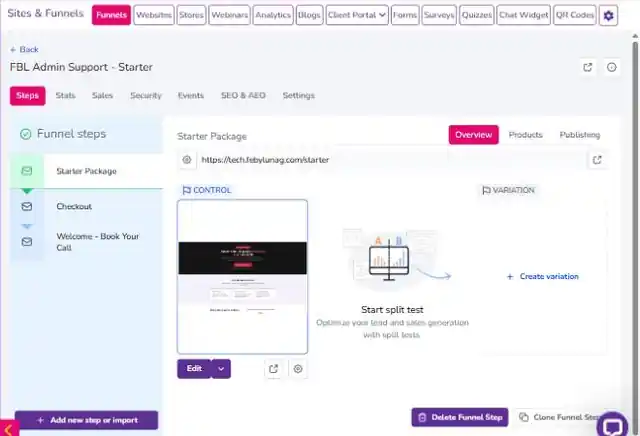
Here is what one of my funnels looks like from the inside. I built it in Tekmatix, the platform I use every day. It has three steps, listed on the left: the sales page, the checkout and the welcome page.
Step 1: the sales page
The first page explains one offer and asks for one action. It says what the visitor gets, what it costs and what to do next. There is no menu, no sidebar and no second offer competing for attention.
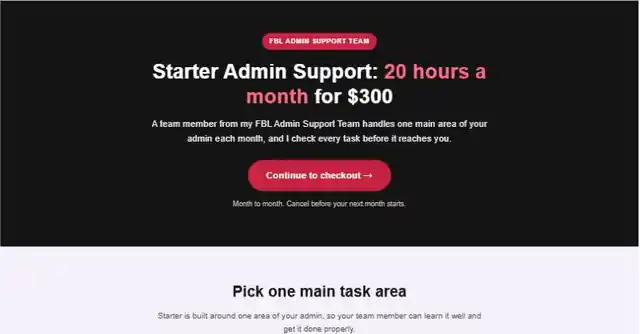
A good sales page answers the questions a buyer already has in their head:
- What is this, in one sentence?
- Is it for someone like me?
- What exactly do I get?
- How much is it, and can I cancel?
- What happens after I click?
Step 2: the checkout
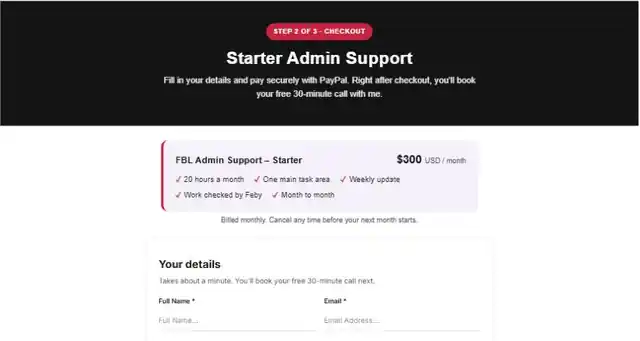
The button on the sales page leads here. The checkout repeats what the person is buying, so they feel sure, then asks only for the details that are really needed. Every extra box on a form gives people one more reason to stop. The form on this page is a Tekmatix form, so every order lands in my contact list without me copying anything across.
Tip
Show the step the buyer is on, such as “Step 2 of 3”. People finish forms more readily when they can see the end.
Step 3: the welcome page
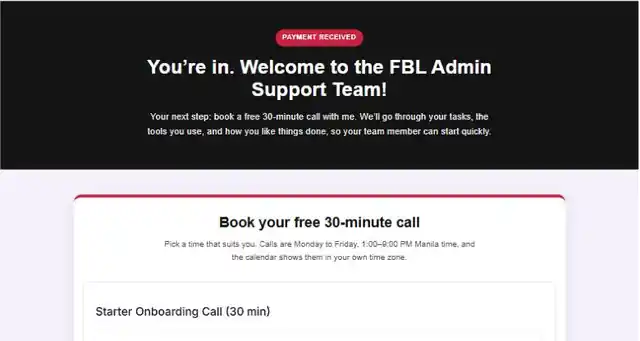
This is the page most people forget. After someone pays or signs up, they should never be left wondering what happens next. My welcome page confirms the payment and asks for the next action straight away: booking a call from a calendar on the same page. The calendar is the Tekmatix booking calendar, so the call goes straight into my diary and the client gets a reminder.
What happens behind the pages
The pages are the part your customer sees. Behind them, a funnel is usually connected to a few other things so the follow-up does not depend on you remembering:
- Your contact list. Each new buyer or sign-up is saved as a contact, so nothing lives on a sticky note.
- Your calendar. Bookings land in your diary with reminders.
- Your emails. A confirmation and a few follow-up emails can go out on their own.
- Your payment provider. The checkout takes the payment, so you are not sending invoices by hand.
I build most of my own funnels in Tekmatix, because the pages, forms, calendar, contacts and emails all sit in one place and it has a 7-day free trial. That link is my referral link, so I may earn a commission if you sign up, at no extra cost to you. The same structure works on other platforms too, including GoHighLevel, ClickFunnels, Kartra and WordPress.
You can do all of this in Tekmatix
Pages, forms, checkout, calendar, contacts and follow-up emails, all in one account instead of five separate tools.
Try Tekmatix free for 7 daysThis is my referral link. I may earn a commission at no extra cost to you.
How I build a funnel for a client
- Agree on one goal. One offer and one action: buy, book or sign up.
- Write the words first. The copy decides the layout, not the other way round.
- Build the pages. Sales page, checkout or sign-up form, and thank-you page, in your brand colours.
- Connect the pieces. Payment, calendar, contact list and follow-up emails.
- Test it like a customer. I go through every step on a phone and a computer before anyone else sees it.
- Hand it over. You get the links and a short walkthrough, so you can change the basics yourself.
Funnel or website: which do you need?
They do different jobs, and most businesses end up with both. A website is where people learn who you are and look around. A funnel is where you send people when you want them to do one specific thing, such as buy a package, book a call or download a free guide. If you run ads or share one link on social media, that link should usually go to a funnel. Tekmatix builds both, so your website and your funnels can live in the same account.
The bottom line
A funnel is three simple pages joined in the right order: explain the offer, take the order, tell them what happens next. The pages themselves are not complicated. What makes a funnel work is clear words, a short form and follow-up that happens without you chasing it.
Want a funnel or website built for you?
I build funnels and websites for business owners, and I take on projects through Upwork, so you get a clear contract, milestones and payment protection.
Hire me on UpworkPrefer to build it yourself? Start a free Tekmatix trial.
Not ready yet? Start with my free AI Admin Audit.