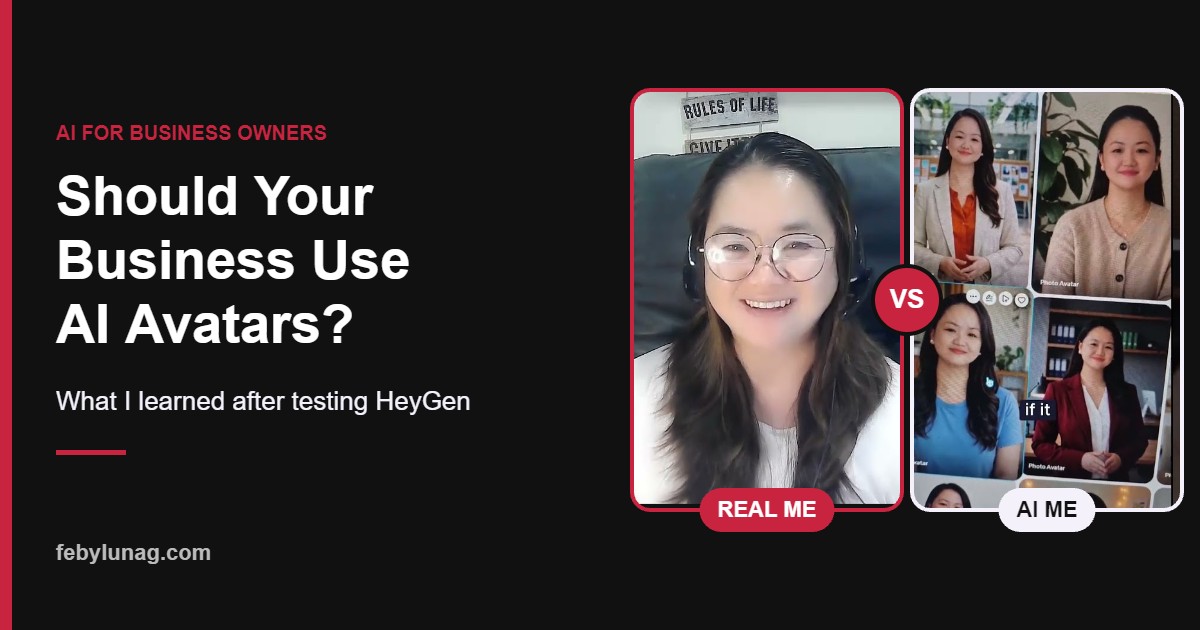
You’ve probably seen them by now: polished, perfectly spoken videos where the “person” on screen never stumbles, never says “um,” and somehow looks great every single day. Many of them aren’t real people at all. They’re AI avatars.
One of the most popular tools for making them is HeyGen. I tested it myself and made a lot of videos with an AI version of me. Then I stopped using it. Not because the tool is bad (it’s genuinely impressive), but because of a question every business owner should ask before automating anything with AI.
Here’s the short video where I talk about it, and below it, the business takeaways.
What HeyGen actually does
HeyGen lets you create a digital avatar of yourself, clone your voice, and then simply type a script. The avatar delivers it for you on camera. No filming, no retakes, no lighting setup.
The results surprised me. My avatar spoke fluently, never lost its train of thought, and could “wear” whatever I wanted. It even looked like a much younger version of me. If you need a lot of video content, that’s a serious time-saver.
Where AI avatars make real sense for a business
In my experience, AI avatars work best when the message matters more than the messenger and you need a lot of it. For example:
- Training and onboarding videos: update a process video by editing the script instead of re-recording.
- Online course content: produce lessons faster and keep them consistent.
- Product walkthroughs and FAQs: answer the same questions on video without filming each one.
- High-volume marketing content: test more ideas without blocking out filming days.
So why did I stop using it?
Honestly? I’m not a naturally confident speaker. Even after more than 13 years working online, my mind still goes blank in meetings sometimes. An AI avatar could hide that completely.
But every time I looked at those videos, they didn’t feel like me. I wasn’t comfortable sharing them. So I made a choice: show up as myself, imperfections and all, and use these videos as practice to get better at speaking.
I didn’t stop because HeyGen isn’t good. I stopped because, at this stage, I don’t want AI to replace something I personally want to get better at.
The question to ask before you automate anything
That experience shaped how I think about AI in business. Before automating a task, ask: is my personal presence the point of this, or just the delivery method?
Good candidates for AI
- Repeatable information and training
- Internal updates and SOP refreshers
- First drafts of content and emails
- Follow-ups, reminders and data entry
Keep these human
- Your personal story and brand voice
- Sales conversations where trust matters
- Sensitive client messages and apologies
- Relationship-building with your audience
If you want to try AI avatars, start here
- Test on the smallest plan first. I started on the entry-level creator plan just to learn the tool. Plans and promos change often, so check HeyGen’s current pricing before committing.
- Start with internal videos. Training and team updates are a low-risk way to see if it fits.
- Be upfront with your audience. If an avatar is speaking for you publicly, say so. Trust is hard to rebuild once people feel misled.
- Watch how it feels. If you hesitate to hit “publish” (like I did), that’s useful information too.
AI should free you up, not replace what makes you you
This is the same lens I use when I set up AI for business owners. The goal isn’t to automate everything. It’s to hand the repetitive work to AI so you have more time and energy for the parts of your business that only you can do.
Not sure what to automate in your business?
Book a free 15-minute call and we’ll look at which tasks in your business are ready for AI, and which ones should stay with you.
Book a free 15-minute call